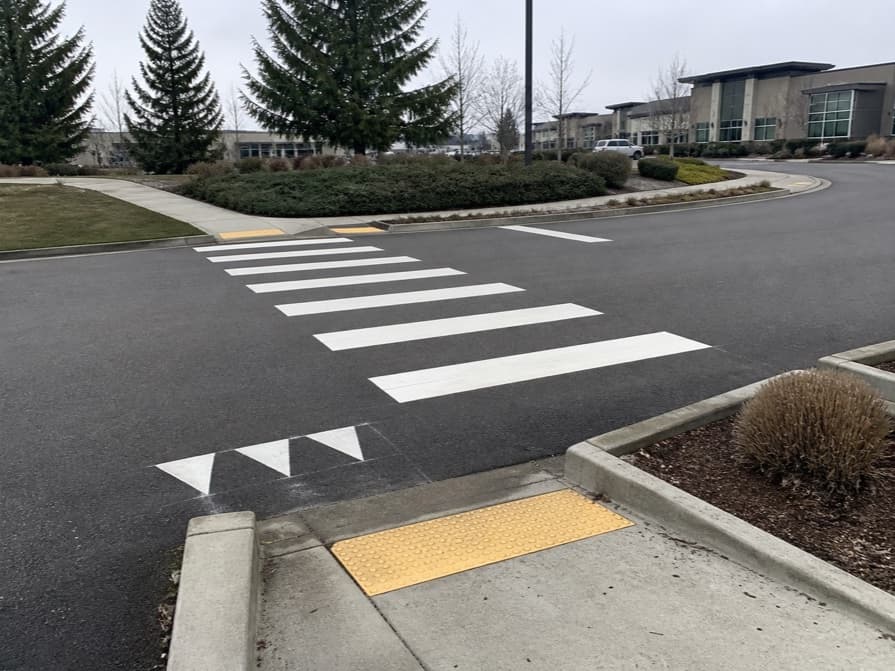
Thermoplastic pavement markings
What thermoplastic pavement markings are
Thermoplastic is a hot-applied marking material. We melt it to roughly 400 degrees, lay it down at two to three times the thickness of standard paint and embed glass beads into the surface while it's still hot. The beads give it its night visibility: headlights bounce right back at the driver.
The thickness is what makes it last. Tires grind paint thin in a season. Thermoplastic is thick enough that the same traffic wears it down at a fraction of the rate, which is why municipal roadways and high-traffic lots spec it for the markings that matter most.
Thermoplastic vs. paint
- Thickness: about two to three times thicker than standard paint, so it survives traffic abrasion far longer.
- Life in high-traffic areas: typically three to five years for thermoplastic, one to two for paint.
- Night visibility: beads stay reflective for the life of the marking, while painted retroreflectivity fades fast.
- Upfront cost: higher per square foot, which is why it's worth picking the right markings for it.
- Cure: hot-applied and set in minutes; the area is back in traffic the same day.
Where it makes sense
- Crosswalks: the most-worn marking on most properties, and the one drivers need to see most.
- High-traffic arrows and lane use markings: the aisles and entrances that take the most tires.
- Stop bars and limit lines: small area, high consequence, long life.
- School zones and playground approaches: where visibility is a safety question, not a cosmetic one.
- Municipal and roadway markings: where spec calls for thermoplastic, we apply to spec.
We'll tell you where it's worth it
Not every line on a lot deserves thermoplastic. Restriping a hundred standard stalls in thermoplastic is spending money the pavement doesn't need. We mark out where the wear and the exposure justify it, stripe the rest in quality paint, and hand you one price for the whole plan.
Common questions about thermoplastic markings.
How long do thermoplastic markings last compared to paint?
Why do thermoplastic markings show up brighter at night?
Is thermoplastic worth the extra cost over paint?
What conditions are needed to apply thermoplastic?
Do you do roadway and municipal thermoplastic work?
Tell us which markings need to last.
Send us the address and which areas take the most wear. We'll price the thermoplastic where it earns its cost and the paint where it doesn't.