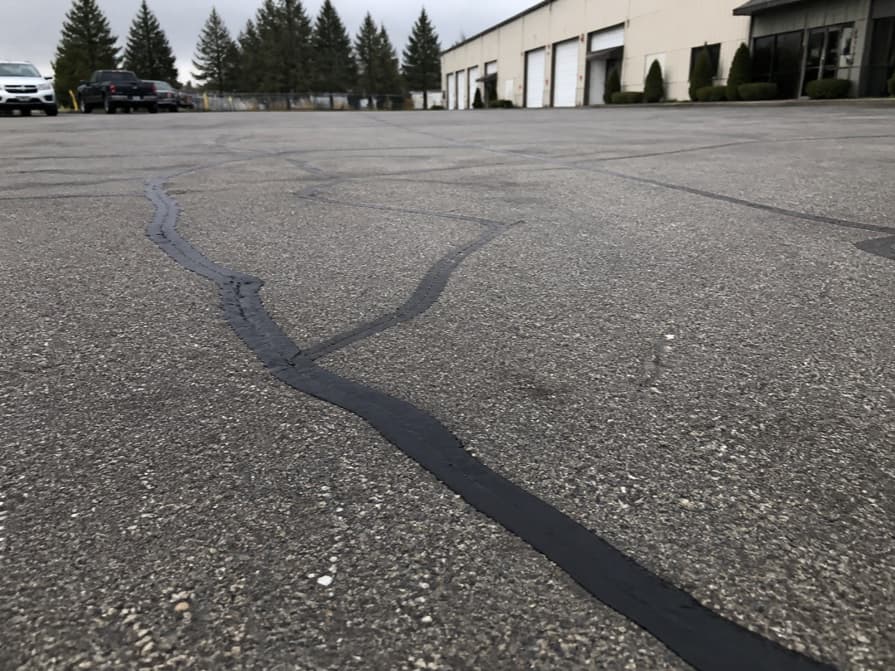
Crack sealing & seal coating
Two jobs that protect the same pavement
Crack sealing stops water from getting into individual cracks, and seal coating protects the whole surface from UV, oil and weather. Most pavement that looks tired isn't failing because of the surface, it's failing from underneath, where water got in through a crack and did its slow work.
That's why the two jobs come as a set. We seal the cracks first, then coat the full surface, and the whole point is that it's cheaper now than any replacement will be later.
What seal coating is
Seal coating is a protective layer applied over asphalt to keep UV, oil, water and freeze-thaw cycles from breaking the surface down. It's not a fix for a failing lot, it's the thing that keeps a good lot good. Done on schedule, it's the cheapest square foot of pavement work you'll ever buy.
How we do it
- We walk the lot first. We mark what needs crack sealing, what needs patching, and where the water is actually going, because a coat over standing water is just expensive paint.
- We cut and clean the cracks. Open them up, blow them out, then fill with hot rubberized filler. This is the step most people skip and regret.
- We patch what's failing. Alligator patches and potholes get cut square, primed and filled. Seal coat over a failing area just moves the bill to next year.
- We coat the full surface. Emulsion, applied at the right thickness, cured before the lot goes back into service.
Why it matters more here than most places
Pavement in southwest Washington lives in a cycle: wet season soaks it, winter freezes it, spring thaws it, and summer sun bakes what's left. Every unsealed crack takes that cycle in and lets it do damage under the surface. A lot that looks fine in August is usually already failing underneath, and the cost of not sealing shows up two winters later as potholes and alligator patches.
It's also a curb appeal job. A fresh coat is the difference between a property that looks maintained and one that looks tired, which matters for residential driveways and absolutely matters for commercial properties trying to hold tenants.
Common questions about seal coating.
How often should I seal coat my driveway or parking lot?
How long before I can drive on it?
What's the difference between crack sealing and seal coating?
When's the best time of year to do it around here?
Do you do commercial lots, or just driveways?
What does crack sealing and seal coating cost?
Let's look at the pavement.
Send us the address and what you need done. We'll walk the surface, talk through the options and give you a written price.