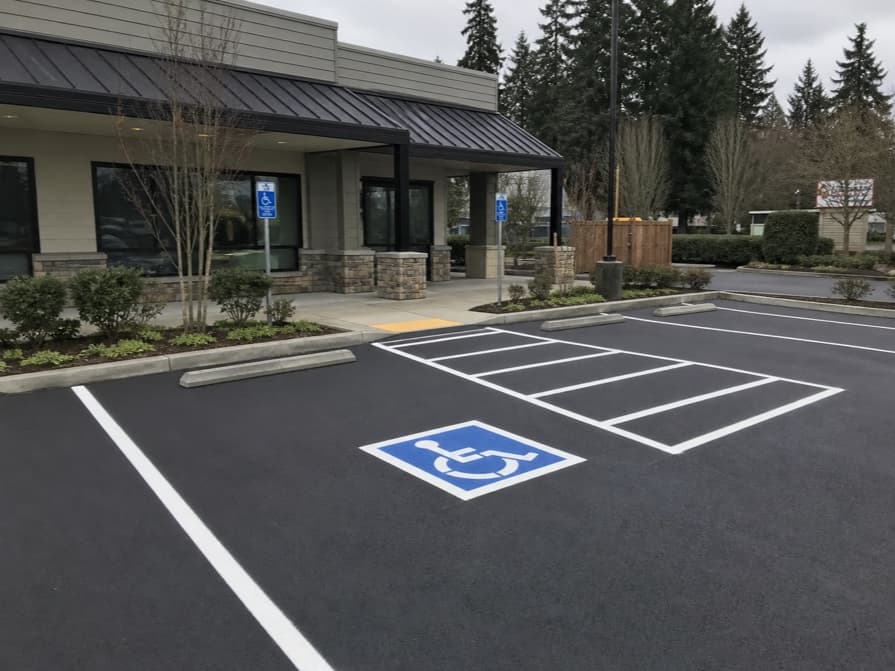
Sign installation
Signs are only as good as their placement
A stop sign in the wrong spot is worse than no sign, and an ADA placard that doesn't sit within sight of its stall doesn't count. We supply the signs, mount them, and place them where the code and the driver's line of sight actually agree.
We install the signage that goes with the striping plan, not the other way around. When the lines and the signs tell the same story, the lot runs itself: drivers make the right call without thinking, and inspectors stop finding things to point at.
What we install
- ADA accessible parking signs for compliant stalls, placed within the sight lines the code expects.
- Fire lane signs with the spacing inspectors look for, matched to the fire lane striping.
- Directional and wayfinding signs: entrance arrows, lane use, building identifiers and one-way indicators.
- Warning and regulatory signs: stop, yield, speed reminders and no-parking postings where the layout needs them.
Why placement is the whole job
Compliance isn't just about having the sign. It's about where it sits relative to the stall, the curb and the driver's approach, and whether it's at the height and angle where it can be read from a moving car. We set the placement during the layout walk, the same visit where we check the striping, so nothing gets mounted and then has to come back for a reposition.
Supplied and installed
We source the signs to spec (correct size, reflectivity and mounting hardware for the application), deliver and mount them, and coordinate the install with the striping so the lot never sits half-marked. For property managers, signage gets folded into the maintenance program, so the signs get re-checked on the same cycle as the lines.
Common questions about signage.
Do you supply the signs, or do we buy them ourselves?
How many ADA signs does a parking lot need?
Do fire lane markings need signs too?
Can you install signs on an existing lot without restriping?
How long does a typical signage install take?
Tell us what the lot is missing.
Send us the address and which signs are faded, missing or out of code. We'll spec the set, price it in writing and install it in a day.